HVD_SE was designed to make high-value Swedish company data usable in real operational and analytical workflows. The challenge was not access alone. It was building a pipeline that could survive rate limits, inconsistent source behavior, large call volumes, and the need for traceable, resumable execution in a regulated context.
Situation
Public-sector datasets often look open on paper but remain difficult to use in practice. Bulk downloads, authenticated APIs, per-organization calls, and uneven payload quality create a delivery problem that many downstream users are not equipped to solve themselves. This project focused on converting that complexity into a repeatable data product.
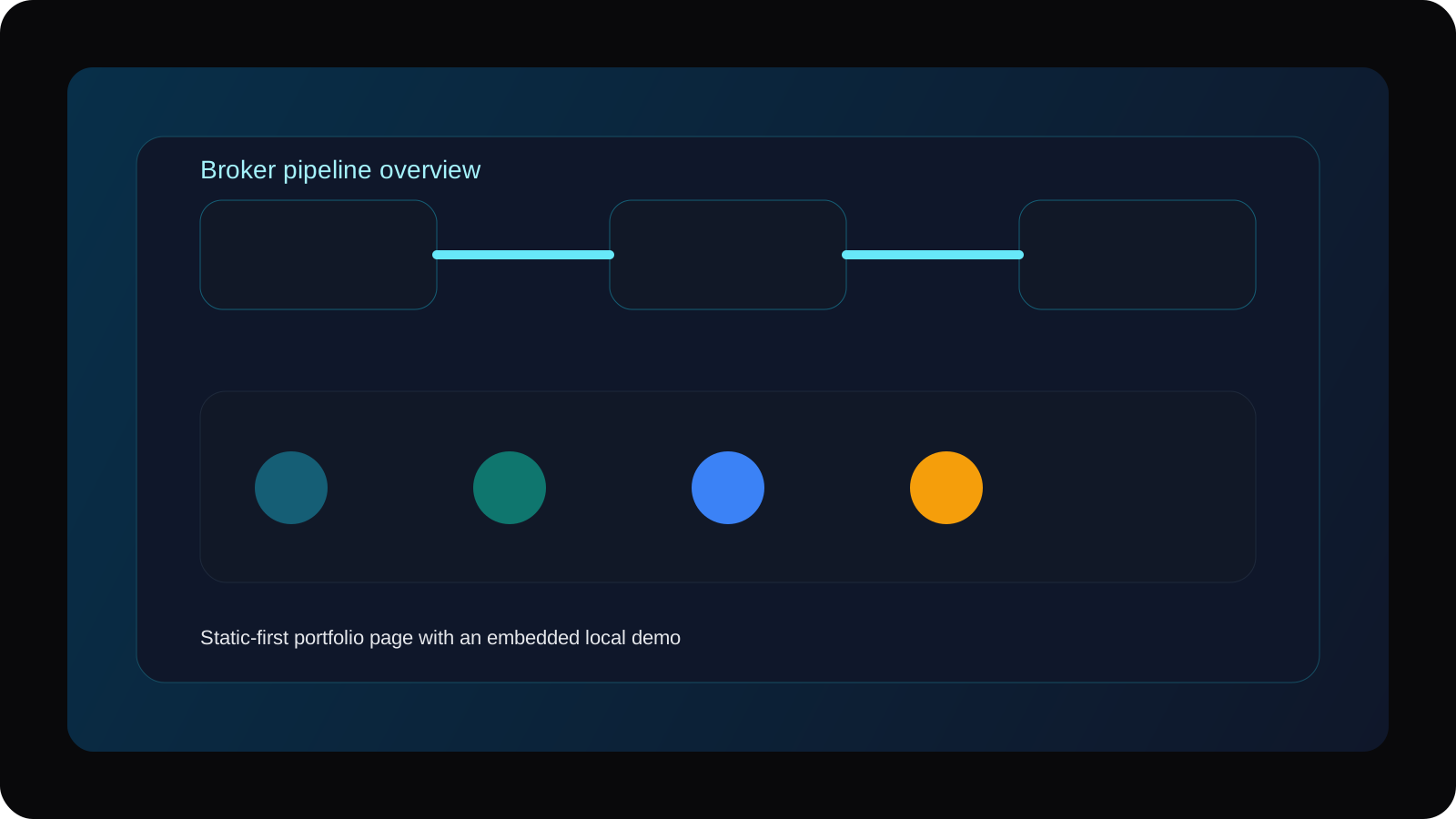
Pipeline model
Async + resumable
Queue layer
SQLite-backed
Output formats
JSONL + Parquet
Filing parsing
Arelle powered
Core constraints
- The source model depended on large numbers of per-company API interactions
- Rate limiting and retries had to be engineered into the system from the start
- Long-running jobs needed safe stop-and-resume behavior
- Outputs had to be useful beyond engineering, including analytics, compliance, and warehousing use cases
Delivery approach
Durable job orchestration
The pipeline used SQLite-backed queues, checkpointing, and idempotent stages so processing could pause and resume without duplicate work or corrupted state.
Scalable extraction
Concurrency controls, backoff logic, and deduplication kept the system productive while still respecting source constraints. Sharded storage helped avoid filesystem bottlenecks as artifacts accumulated across many organizations.
Analytics-ready transformation
Document metadata and organization profiles were preserved in JSONL for flexible downstream use, while financial facts were extracted into Parquet for faster querying and modeling.
Observability and traceability
Structured logs, request identifiers, metrics, and error catalogs made the pipeline more defensible in a regulated data setting where reproducibility and auditability matter.
Note
Why this matters
The professional value here is not only in moving data. It is in making difficult public-sector data reliable enough to support business workflows, analytics programs, and future product development.
Result
The output was a more dependable company-data pipeline that transformed difficult source material into reusable analytical assets. Instead of treating official datasets as a one-off engineering burden, the project turned them into a structured foundation for downstream intelligence, compliance, and modeling work.